
Blog
A New Horizon for Bangladeshi Products in the U.S. Market: Now Is the Time for Export Diversification

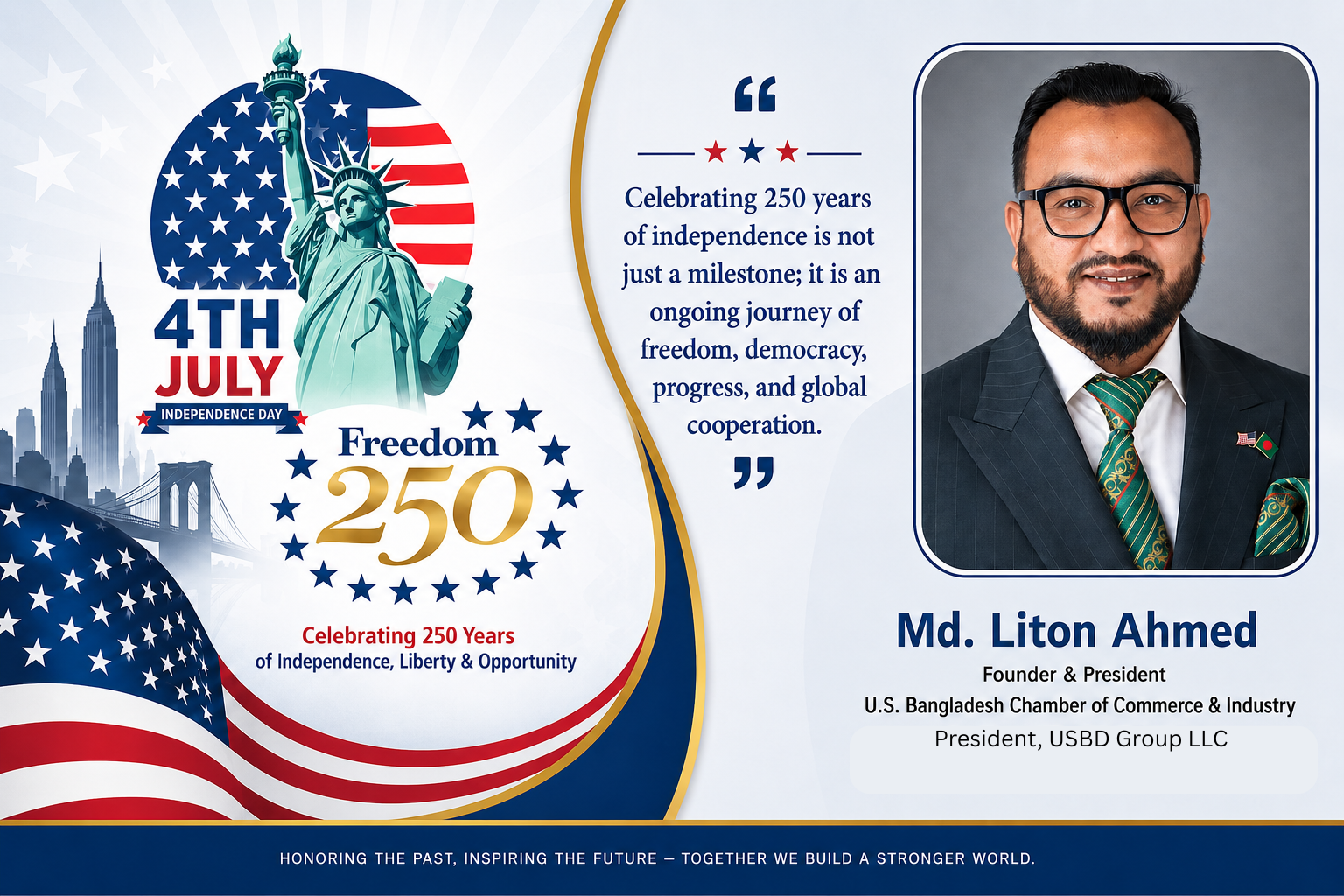
Md. Liton Ahmed
Founder & President
U.S. Bangladesh Chamber of Commerce & Industry (USBCCI)
The relationship between Bangladesh and the United States is no longer limited to diplomatic goodwill or development cooperation. Over the past five decades, this relationship has gradually evolved into a strong economic partnership. Through trade, investment, technology, innovation, and entrepreneurial development, cooperation between the two countries continues to expand, with enormous potential for deeper and more diversified engagement in the future.
Today, the United States is one of Bangladesh’s largest single export markets. Every year, Bangladesh exports more than USD 8 billion worth of goods to the U.S. This is undoubtedly a significant achievement. However, despite this success, the reality remains that Bangladesh’s presence in this vast market of more than 340 million consumers is still limited compared to its true potential.
For decades, the ready-made garments sector has served as the backbone of Bangladesh’s export earnings. However, in the current global economic landscape, relying heavily on a single sector is not sustainable in the long run. Global competition, changing supply chains, evolving consumer demand, and new market realities require Bangladesh to rethink its export strategy. Now is the time to strengthen the “Made in Bangladesh” brand through export diversification.
Bangladesh has immense potential in food and agro-processed products, home and kitchenware, plastic and household items, eco-friendly jute products, toys, footwear, bags, luggage, pet care products, ceramics, light engineering, pharmaceuticals, and information technology. Demand for these products is growing steadily in the mainstream U.S. market. With proper quality assurance, international certification, standard packaging, and effective branding, these sectors can open new doors for Bangladesh’s export growth.
There is a major opportunity to reach not only the more than half a million Bangladeshis living in the United States, but also millions of South Asian, Middle Eastern, Hispanic, African, and mainstream American consumers. This market is not only for the Bangladeshi diaspora; it is also a real and strategic platform for building global Bangladeshi brands.
A successful example of this potential is PRAN-RFL Group. The company currently markets more than 700 food and non-food products in the United States. In the last fiscal year, its exports exceeded USD 100 million, nearly doubling compared to the previous year. More importantly, its products are now available in leading U.S. retail chains such as Walmart, Target, Dollar Tree, Family Dollar, Dollar General, Food Town, and K-Town. This clearly demonstrates that Bangladeshi companies can build a strong position in the global market when they ensure international quality, consistency, and a clear market strategy.
However, alongside these opportunities, there are also important challenges. Greater investment is needed in areas such as international food safety standards, requirements from regulatory bodies including the FDA, advanced laboratory facilities, international certification, quality packaging, and branding. At the same time, longer lead times, higher transportation costs, and supply chain limitations compared to countries such as China, Vietnam, and Thailand continue to affect Bangladesh’s competitiveness.
To overcome these challenges, the government and private sector must work together in a coordinated way. Investment must be increased in modern seaports, faster customs clearance, cold chain infrastructure, internationally accredited testing laboratories, digital export management systems, and improved logistics facilities. At the same time, small and medium-sized enterprises need financial support, training, certification assistance, and strong market linkages to enter international markets successfully.
Branding is another crucial area. Many countries do not simply export products; they export a national brand. Bangladesh must establish “Made in Bangladesh” as a symbol of quality, trust, innovation, and sustainable production. This requires stronger participation in international trade shows, B2B business matchmaking, digital marketing, e-commerce platforms, and retail networks.
Bangladeshi diaspora entrepreneurs living in the United States can play a vital role in this journey. They are not only consumers; they can also be investors, distributors, brand ambassadors, and business bridges between the two countries. Their experience, networks, and practical knowledge of the U.S. market can become valuable assets in expanding Bangladesh’s exports.
The U.S. Bangladesh Chamber of Commerce & Industry (USBCCI) has long been working to strengthen trade, investment, and entrepreneurial cooperation between Bangladesh and the United States. Through international trade expos, business conferences, investment forums, B2B matchmaking, and diaspora business networks, USBCCI continues its efforts to create new market opportunities for Bangladeshi products and establish long-term business partnerships.
I believe that in the coming decade, the economic relationship between Bangladesh and the United States will become even stronger. Bangladesh will gain new investment, advanced technology, greater employment opportunities, and new horizons for export earnings. At the same time, the United States will gain a reliable, competitive, sustainable, and trusted production partner.
Now is the time to make bold decisions. Now is the time to diversify exports. Now is the time to establish the “Made in Bangladesh” brand with a new identity in the global market.
Bangladesh’s potential is not only the story of one country’s economic progress; it is the story of emerging as a new force in the future of global trade.